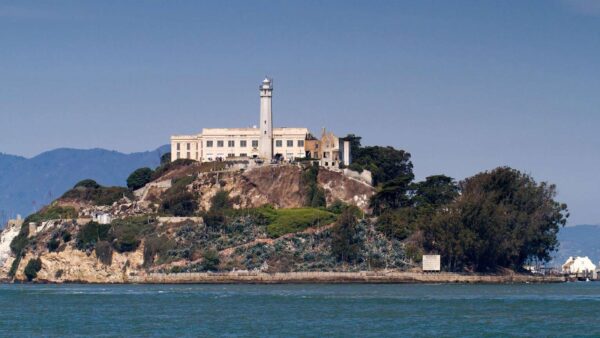
The Forgotten Occupation of Alcatraz in the Late 1960s
When you think of Alcatraz you likely think of the famous prison, and possibly Al Capone, languishing amidst the frigid windy bay of San Francisco.
But did you know at one time Alcatraz was occupied by a group of Native American activists claiming the building and land belonged to them?
In late 1969 the country had already spent years embroiled in social protests, as far-reaching as Vietnam anti-war marches, struggles for civil rights, and feminist uprisings. During this time the former prison situated on an island in the middle of the bay, had been abandoned for six years. Not knowing what to do with this white elephant, Alcatraz was subsequently declared surplus federal property.
By a stroke of luck or genius, a group of Native American protesters discovered that under the 1868 Treaty of Fort Laramie, unused federal land was supposed to be returned to Native Americans.

So on November 20, 1969, 89 native activists, mostly students, calling themselves the Indians of All Tribes landed on Alcatraz under the charismatic leadership of Richard Oakes, a descendant of the Mohawk tribe. They offered to buy the island from the U.S. government for $24 in glass beads and red cloth, which mirrored the supposed sale of Manhattan back in the day. It was a brilliant public relations strategy and the occupation soon gained national attention with various celebrities like Marlon Brando and Jane Fonda joining in.
For 19 months the interlopers lived in the prison . It was tough going under the best of circumstances and this was not the best of circumstances. Families, students, and volunteers set up a school, clinic and media center, surviving with the help of food and supplies sent by Bay Area and Hollywood supporters. Still, the harsh living conditions, with no heat or running water and internal tensions took a toll, especially after Oakes’ stepdaughter fell out of a prison window and died. He left shortly thereafter.

The occupation finally came to its termination when federal marshals removed the remaining 15 residents on June 11, 1971. There was no fanfare, no fighting. It just ended. But only in that literal sense because Alcatraz became a spark that inspired hundreds of similar land takeovers and helped push the U.S. government away from policies that tried to erase tribal ownership. In 1972 another famous Native American uprising that garnered national attention was the Wounded Knee Occupation of 1973.
To his credit, even President Richard Nixon acknowledged that exisitng U.S. polices were brutally unfair to Native Americans and the Alcatraz occupation was the lynchpin that ushered in a new policy restoring lands to Native tribes.
Culturally, the song Indian Reservation was released by Paul Revere and the Raiders in 1971 (seen below), and Marlon Brando famously refused the Oscar for Best Actor in The Godfather in March 1973, citing the treatment of Native Americans. A representative for Brando, Sasheen Littlefeather, addressed the stunned Academy on live TV when refusing the Oscar. It garnered massive attention. You can view it here.
For a pre-release discount on The Haunting that Ended the Summer of Love, I invite you to sign the reminder form on this page.
Comments (0)